
We are not New to This. We are True to This: Mindfulness as a Practice of Remembrance.
Black History and African Heritage, Winter Reflection, and the Wisdom We Carry
By Travis Spencer and Kamilah Crawley
When we hear the word mindfulness today, it’s often framed as something modern—something newly discovered, packaged, or taught in studios and classrooms. But for Black and African communities, mindfulness is not new. It is remembered.
Long before the term existed, our ancestors practiced presence and connection as part of everyday life. These practices were woven into culture, community, ceremony, joy, and care. They were passed down through families and communities—not as techniques, but as ways of being.
As we honor Black History or African Heritage Month during the winter season, we are invited into a deeper remembering. Winter calls us inward—to introspection, stillness, rest, reflection, and grace. African heritage reminds us that slowing down, listening deeply, and nurturing ourselves and one another have always been part of who we are.
Mindfulness in THE MEMORY of Our Cultural LINEAGE
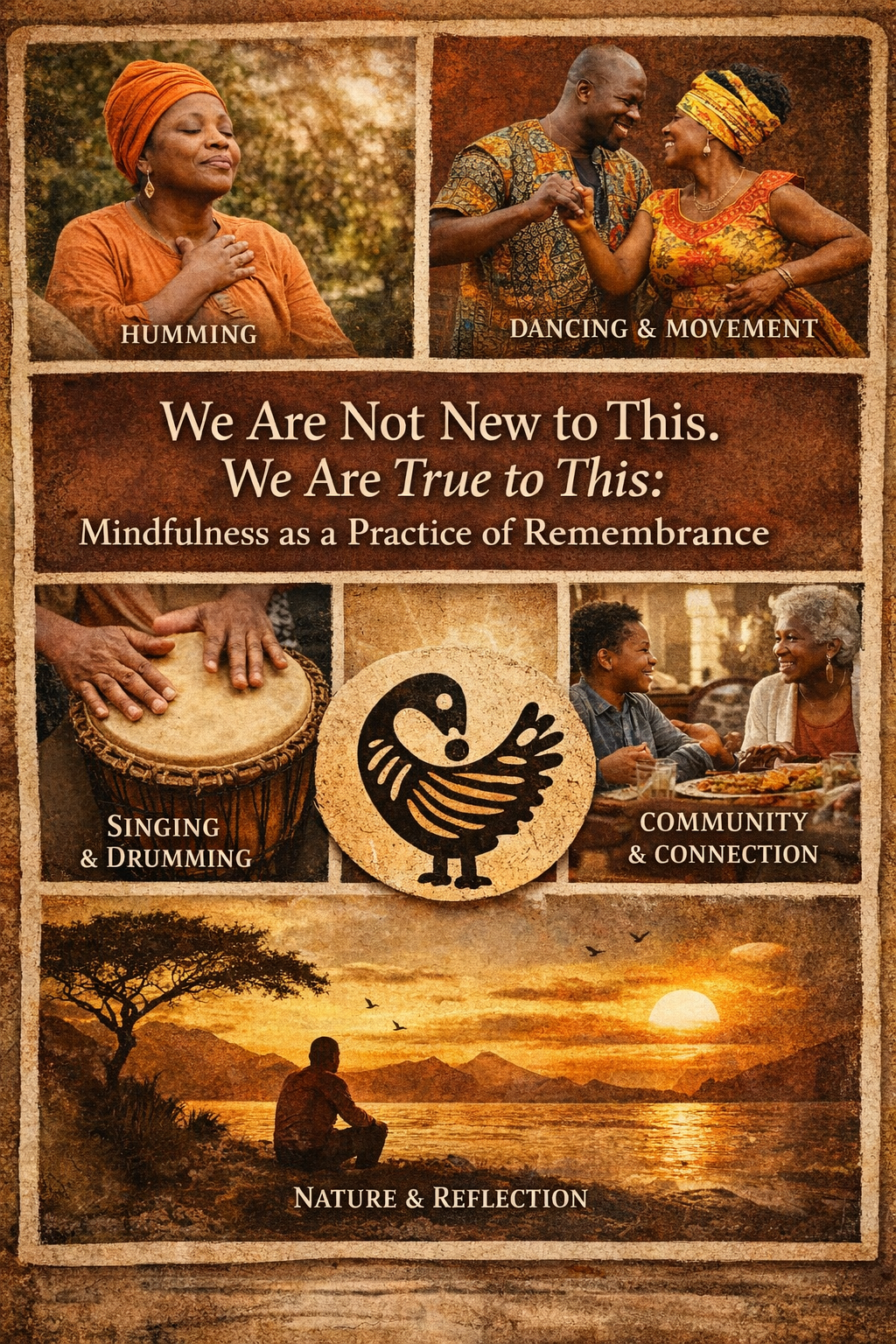
Humming
Humming has long been used in Black communities—while working, soothing children, praying, or resting. Today, we know that humming activates the parasympathetic nervous system, helping the body shift out of stress and into a calm state. Our ancestors may not have named the science, but they knew the medicine. Humming anchors us in the present moment and brings the body home.
Dancing & Movement
Movement has always been sacred. From communal dances to individual expressions of rhythm, African and African American traditions use the body as a vessel for release, joy, grief, and celebration. Dance is mindfulness in motion—listening to the body, following rhythm, expressing what words cannot.
Singing, Drumming, & Music
Song and sound have always carried us. Drums, call-and-response, clapping, and instruments were—and still are—ways of expressing emotion, building unity, and staying present. Music grounded people during labor, ritual, resistance, and worship. It kept time, memory, and spirit alive.
Relational Mindfulness
Gathering around meals. Checking in on one another. Sharing stories and caring for children and elders collectively. Presence has never been an individual pursuit alone—it has been relational. Being mindful meant being in tune with each other, noticing who needed support, and showing up with care.
Connection to Nature
Our lineage is deeply connected to the land, water, seasons, and sky. Being outside, listening to the wind, watching the sun rise or set—these were not luxuries. They were grounding practices that reminded people that they are one with nature.
A Brief Heritage-Based Practice: Mindful Humming for Winter Stillness
As winter invites rest and reflection, try this simple practice rooted in ancestral wisdom:
Find a comfortable seated position.
Take a slow breath in through your nose.
On the exhale, gently hum—any tone that feels natural.
Let the vibration move through your chest, throat, and face.
Repeat for 3–5 breaths, noticing any softening in your body.
As you hum, you might silently reflect:
What wisdom from my past is supporting me right now?
This practice honors stillness, nurtures calm, and reconnects you to a lineage that knew how to self-soothe and restore.
Nurturing Change & Growth: Remembering to Move Forward
In African traditions, growth has always been linked to remembering. The wisdom of Sankofa—looking back to move forward—reminds us that change is not about abandoning the past, but learning from it.
This winter season asks us to pause, acknowledge what has been, accept where we are, and gently nurture what wants to grow next. When we root mindfulness in heritage, it becomes an act of self-compassion, cultural affirmation, and collective healing.
We are not learning something new—we are reclaiming something ancient.