
More Than Headlines: Building Awareness and Black Pride
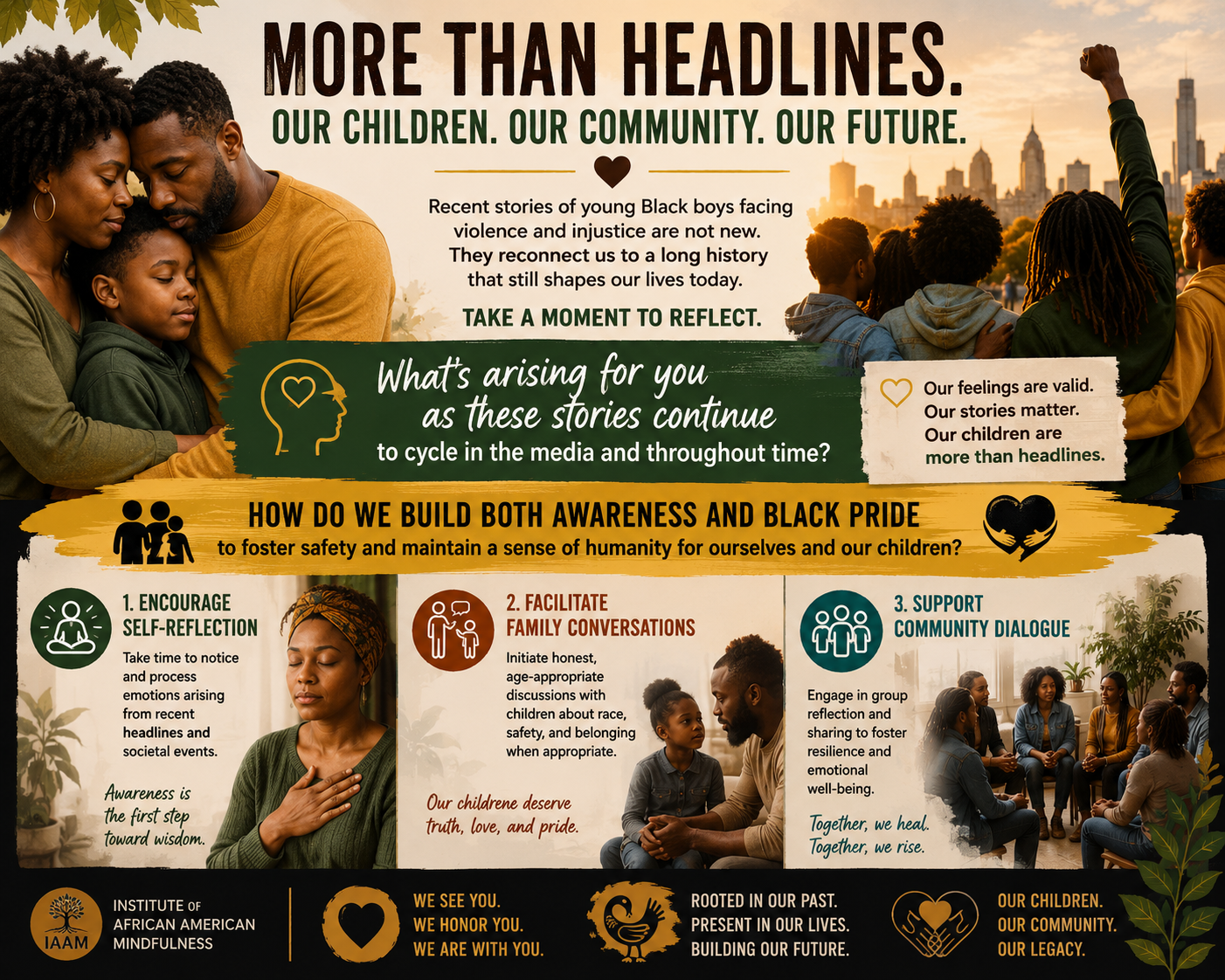
By Kamilah Crawley and Travis Spencer
Recent headlines featuring young Black boys who have died or are navigating the "injustice system" remind us that the questions Frederick Douglass raised in "What to the Slave Is the Fourth of July?" remain painfully relevant. For many Black families, these stories evoke grief, fear, anger, and uncertainty—not only about today's reality but about the future of our children.
As these stories continue to cycle through the media, we invite you to pause and reflect:
What is arising within you?
Mindfulness encourages us not to rush toward answers but to begin by noticing our emotions with honesty and compassion. By acknowledging fear, sadness, or frustration without judgment, we create space to respond with wisdom rather than react from overwhelm.
Parents often face the difficult task of preparing their children for the realities of racism while also nurturing confidence, joy, and a strong sense of identity. Our children deserve to know the truth about our history, but they also deserve to know the truth about themselves—that they are worthy, brilliant, loved, and deeply connected to a legacy of resilience.
Our ancestors met unimaginable challenges with courage, faith, creativity, and community. Their resilience lives within us and reminds us that Black history is not only a story of struggle but also one of strength, excellence, and hope.
Healing does not happen in isolation. It happens in community. When we gather to reflect, listen, and support one another, we strengthen our capacity to care for ourselves and the next generation.
Reflection into Action
Practice Self-Reflection: Notice and process the emotions that arise from current events with mindfulness and self-compassion.
Have Courageous Conversations: Create developmentally appropriate opportunities to talk with children about race, safety, belonging, and Black pride.
Lean on Community: Engage in conversations that foster connection, resilience, and collective healing.
As we move forward together, may we continue asking:
How do we build both awareness and Black pride to foster safety and maintain a sense of humanity for ourselves and our children?
The answer begins with mindful presence, honest dialogue, and the unwavering belief that our children are—and always will be—far more than the headlines.